

Are contemporary plays necessary during wartime – in general? And readings of plays at Echo Lubimovka – in particular?
As we look back on 2025, we begin sharing a series of publications reflecting on its outcomes. Theatre critic Anna Lachmatova shares her conclusions on the significance of the new drama festival "Lubimovka – Echo", which was held for the first time in Vienna in November 2025 with the support of Dialogbüro Vienna.
"Did you do this? – No, you did this". According to the legend, this was Pablo Picasso's response to a German officer who visited his studio during the occupation of Paris, and saw a reproduction of the painting ‘Guernica’ on Picasso's desk.
Part I: Instead of a Reference
In 2022, after Russia's full-scale invasion in Ukraine began, many Russian artists went through several similar stages:
- the feeling that the invasion could be stopped if they acted together;
- the feeling that there was no more community, therefore, nothing could be done together;
- a feeling that their profession was useless and even a disgust for it (we were all taught a quote from Dostoevsky's 'Idiot' that ‘beauty will save the world’; but few paid attention to Nabokov's words that art owes nothing to anyone and will save nobody);
- step by step, sense that you are not alone began to return: a community was forming anew for each of us. Now it was made up of opponents of the war who were as disillusioned (but not always brave) as you. Along with this came a renewed need to document what was happening: through plays, essays, articles, interviews, video installations, etc.
Thus, nearly four years passed. Russian artists found themselves scattered across the globe. Major Russian festivals either closed or were transformed into instruments of propaganda.
- the feeling that the invasion could be stopped if they acted together;
- the feeling that there was no more community, therefore, nothing could be done together;
- a feeling that their profession was useless and even a disgust for it (we were all taught a quote from Dostoevsky's 'Idiot' that ‘beauty will save the world’; but few paid attention to Nabokov's words that art owes nothing to anyone and will save nobody);
- step by step, sense that you are not alone began to return: a community was forming anew for each of us. Now it was made up of opponents of the war who were as disillusioned (but not always brave) as you. Along with this came a renewed need to document what was happening: through plays, essays, articles, interviews, video installations, etc.
Thus, nearly four years passed. Russian artists found themselves scattered across the globe. Major Russian festivals either closed or were transformed into instruments of propaganda.
Instead of a reference. The Lubimovka Festival of New Drama was conceived in 1990, at the height of perestroika, by two young authors: Elena Gremina and Mikhail Ugarov. By launching Lubimovka, they not only managed to overcome the severe crisis in drama of those years. For almost three decades, their festival has defined the repertoire of Russian theatre and, to some extent, cinema, giving the world new texts — from Russians Mikhail Ugarov and Ivan Vyrypaev to Ukrainians Maxim Kurochkin and Natalia Vorozhbit; Belarusians Pavel Pryazhko and Dmitry Bogoslavsky, etc, etc. Any author from any country who wrote in Russian could participate in the competition.
The festival was named after Konstantin Stanislavsky's former family estate Lubimovka (in the late Soviet era, it housed a holiday home for theatre workers). In early 2000s, prices at the recreation centre rose sharply, so the festival moved to Moscow. Its main venues became the Meyerhold Centre and Teatr.doc (one of the few non-state theatres, also created by Gremina and Ugarov).
Having going through all the twists and turns of recent Russian history, in summer of 2022, ‘Lubimovka’ officially ceased to exist as a festival on Russian territory. It became a semi-legal library of plays, the titles and sometimes even the texts which are posted on the website at the end of each year. During the first months of the war, even the festival's artistic directors (at that time, Yuri Shekhvatov and his colleagues) did not imagine that the festival had not died, but simply changed its format. It turned into a nomadic, wandering event, bringing together people inside and outside Russia. But now those who remain inside prefer to use pseudonyms. And the festival itself has fragmented into many pieces, called ‘Echoes of Lubimovka’. In 2024 Elena Gordienko, Natalia Lizorkina, Zukhra Yanikova, Anastasia Patlay took on the leadership of the festival.
Poet and playwright Roman Osminkin, whose ‘Play of the Digestive Tract of a Baby Born a Month Before the War’ was read at Echo in Munich in October 2025, wrote: ‘Lubimovka,’ in its nomadic format, in the spirit of European documentary and testimonial theatre, creates spaces where people can listen to each other and talk about topics that concern them. Just as theatre created a nation in the Romantic era, so today theatre creates – albeit illusory and short-lived – democratic assemblies for speaking on behalf of the absent and voiceless.
Poet and playwright Roman Osminkin, whose ‘Play of the Digestive Tract of a Baby Born a Month Before the War’ was read at Echo in Munich in October 2025, wrote: ‘Lubimovka,’ in its nomadic format, in the spirit of European documentary and testimonial theatre, creates spaces where people can listen to each other and talk about topics that concern them. Just as theatre created a nation in the Romantic era, so today theatre creates – albeit illusory and short-lived – democratic assemblies for speaking on behalf of the absent and voiceless.
Part II: My Personal Lubimovka
In April 2023, I attended ‘Echo of Lubimovka’ in Berlin. I went there fearing that the festival would turn out to be an emigrant ‘get-together’ (or ‘expat clique’). That was not the case – most of the plays were performed in German or English. The teams of directors and actors were international, and the plays themselves were selected as if to explore the history of our country's ills: from the violence taking place in Russian army ('Unknown Soldier' by Artem Materinsky) and our total indifference to the bombings in Syria ('The Battle for Mosul' by Alexei Zhitkovsky) to Natalya Lizorkina's text 'Vanya is Alive', which really shocked me. Lizorkina's way of thinking, where her characters talk about what's happening to them in a way that's the exact opposite of what it really means — ‘alive’ means ‘dead,’ ‘completely free’ means ‘captive’ — took Soviet doublethink to an absurd and scary extreme.
However, I was able to fully believe in 'Echo of Lubimovka' after 'Women in the Dark' — a play by Kyiv residents Masha Denisova and Iryna Serebryakova. It was compiled from personal diaries, chats and correspondence on social networks kept by Kyiv residents who were deprived of heat and light in winter of 2022.
However, I was able to fully believe in 'Echo of Lubimovka' after 'Women in the Dark' — a play by Kyiv residents Masha Denisova and Iryna Serebryakova. It was compiled from personal diaries, chats and correspondence on social networks kept by Kyiv residents who were deprived of heat and light in winter of 2022.

‘Try to live your life so that you never know the taste of yesterday's instant noodles’; ‘My new stylish accessory is a headlamp’ — German director and translator Setchel Reemtsma turned these texts into an excellent performance, played by graceful and flexible actresses, whom the audience could only see as long as the matches they lit were burning. The fact that reading of a Ukrainian play, in the discussion of which Iryna Serebryakova participated, became part of the ‘Echo’ seemed like a ray of hope at the time.
I followed the rest of the ‘Lubimovkas’ sporadically. My next personal ‘Echo’ took place on 22-23 November 2025. As I was preparing to go to Vienna, I was ready to hear texts that I had read and heard many times during other performances. At the beginning of the war, these texts gave me hope that everything would soon change. But now, three years later, I knew that they had changed nothing.
So why did those two days at ‘Lubimovka’ seem so important to me? I will try to figure it out.
In Vienna Nastya Patlay was the curator, but now the tone was set not by Russian actors, directors and playwrights, but by their German and Austrian colleagues: critics, translators, journalists and Slavicists. Plays were performed exclusively in German, with Russian subtitles.
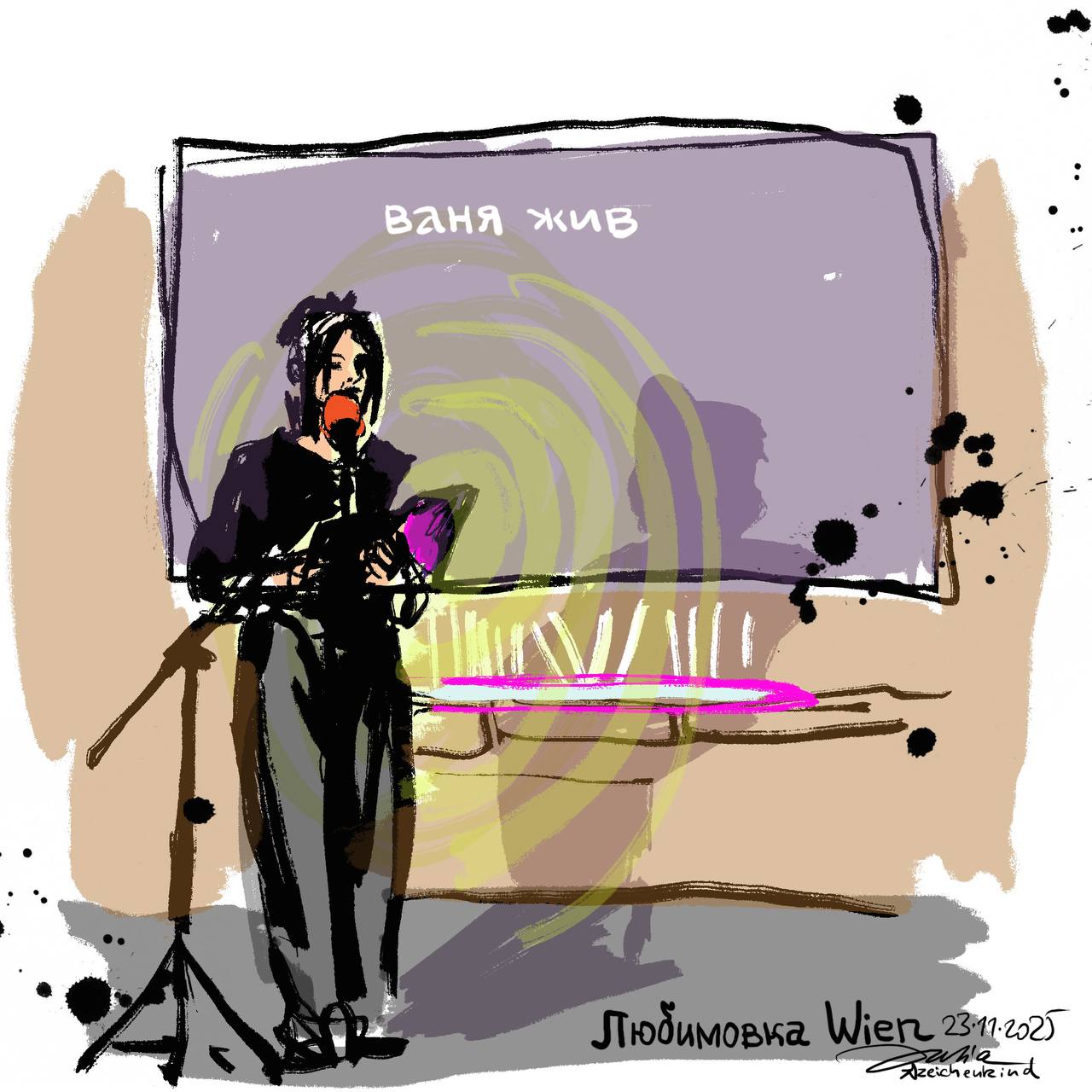
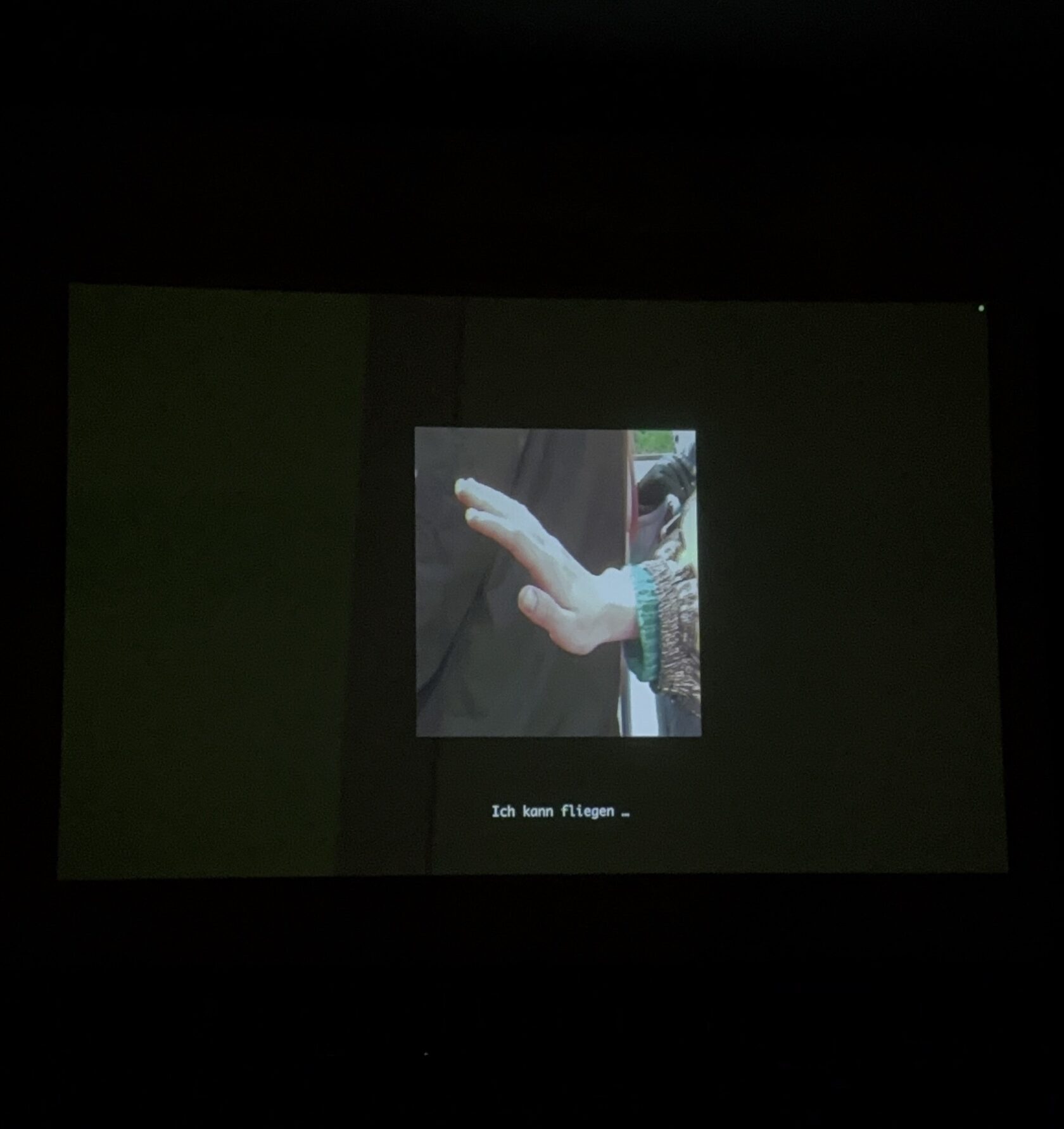
Listening to actress and translator Maria Agni read ‘Vanya is Alive’ – this time not in an evening dress and without beautiful posing; watching translator and performer Ira Süssenbach present ‘Women in the Dark’– simply, without any theatrical tricks; listening the Ukrainian-German-Russian confessions of women from ‘Forbidden Feelings During the War’ (written by the ‘Girls from Jupiter’ group); how the female choir from Marius Ivaskiavichus's ‘The Rise of Gods’ sounds in German; and what incredible silence there was in the hall after the final frames of Liza Kashintseva's video essay ‘Bobik’ (the name given to Soviet off-road vehicles, the successors of which are the current police vans)*, I finally understood what had happened. These stories ceased to be only Russian or only Ukrainian. They separated themselves from the language and the place where it all happened. And even from the various 'Echoes' where they were first heard. Now the female choir, to which Ivashkavičius assigned the role of the main character, Anna Belobrova, who searched for her beloved, Lithuanian filmmaker Mantas Kvedaravičius, under the bullets in Mariupol and a week later found his body, has acquired the same ancient, universal resonance as the choirs of ancient tragedies.
Thus, the plots of plays written about Russia's invasion in Ukraine became a part of universal memory. Thus, Picasso's Guernica, which did not save the victims of the terrible bombing, preserved them forever in history.
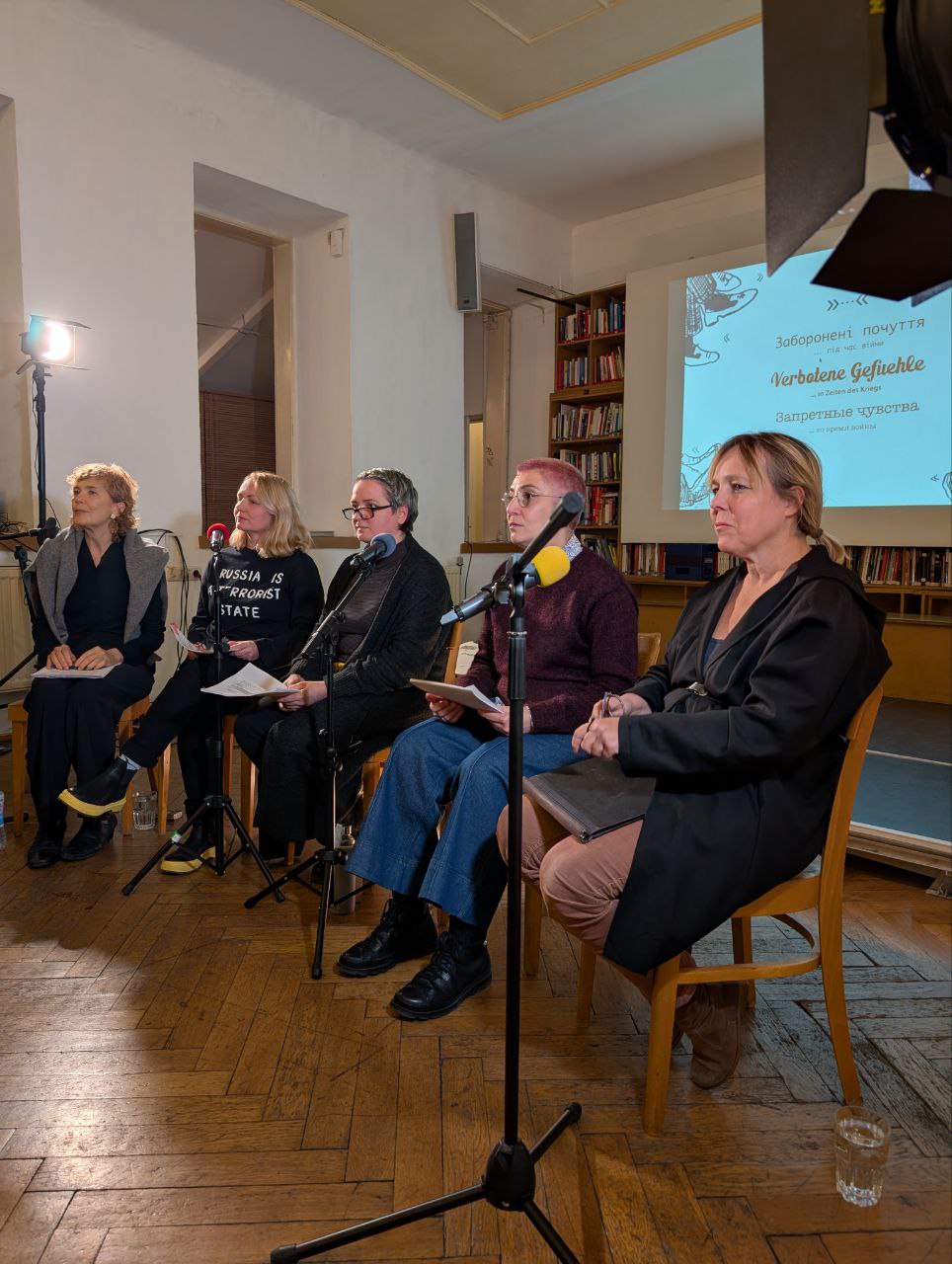
The final reading of Vienna's ‘Echo’ was ‘Say Hi to Abdo’, a play by Mikita Ilyinchik, a Belarusian who moved to Poland. It begins with all of us, actors and audience alike, in a courtroom of the future. Scientists use some special technologies to reconstruct the story of the death of a Kurdish refugee from Iraq who froze to death in an Estonian forest while trying to avoid deportation.
The very image of the trial, which will take place one day anyway, suggests the answer to the question of why ‘Echo of Lubimovka’ is being staged today.
We cannot stop the war, but we must record the facts, on the basis of which the truth will later be restored. The plays of ‘Lubimovka’ are a record of reality. The voices of eyewitnesses, the expression of their ‘forbidden feelings’. A chronicle of time, without which the court of the future would be impossible.
The very image of the trial, which will take place one day anyway, suggests the answer to the question of why ‘Echo of Lubimovka’ is being staged today.
We cannot stop the war, but we must record the facts, on the basis of which the truth will later be restored. The plays of ‘Lubimovka’ are a record of reality. The voices of eyewitnesses, the expression of their ‘forbidden feelings’. A chronicle of time, without which the court of the future would be impossible.
Christina M., a long-time and regular reader of the festival who lives in Russia, talks about the plays submitted to ‘Lubimovka’ in 2025:
‘This year, there were many plays with an in-depth focus on oneself, one’s experiences, and the small details of one’s inner life and that of those around them. A fixation on correspondence, chats, everyday life. I don't want to generalise, but the very way of describing reality is chosen – through oneself, through one's existence in a world in which a person tries to preserve themselves. At the same time, the plays are different: about war, emigration, broken ties between people, someone sitting in prison, someone waiting for their partner; about toxic relationships in a city where someone (more often girls) becomes the object of violence. There are also many documentary texts from Anastasia Patlay and Ekaterina Bondarenko's online laboratory ‘Un/Told’ participants. There are many collages from historical documents – the authors find out who their family and ancestors are, what their identity is. It is an attempt to discover and record their nature, the moment of their existence in the world – whatever happens next.
Instead of an afterword
This article should have been much longer. It should have included dozens of online performances and several dozen plays known to us that are still running in Russia. New ones are constantly being added. These are plays in which the audience instantly grasps the anti-war message. Most of them are performed on small stages, and viewers must register in advance to attend. However, some are also performed on large stages in big cities. For obvious reasons, we will not name them. Just as we cannot name the authors of many plays performed at Echo in different cities around the world. Just as we cannot name the readers, directors, actors and everyone else who remains in the country and believes that one day the fragments of ‘Echo’ will once again become a full-fledged festival.
Part III: ‘I was mesmerised by this completely horizontal initiative’
Anna Lachmatova spoke with director and curator Anastasia Patlay
- Nastya, did you come up with the idea for ‘Echo of Lubimovka’, which travels around the world?
- No, I didn't come up with it. I was just very inspired by it. In October 2022, I saw ‘Echo’ in Tbilisi. Then there were readings in Tel-Aviv and Haifa. And before that, in Narva and Tartu. Then, after the announcement of partial mobilisation in the Russian Federation, many people rushed to Kazakhstan. Yuri Shekhvatov (one of the art directors of ‘Lubimovka’ before the war) and Svetlana Petriychuk were already there. So, at the ARTiSHOK theatre, they staged almost the entire ‘Lubimovka’. Around the same time, I learned that there were some young people in Paris, Yulia Samoylenko and Dima Smirnov, who wanted to do ‘Lubimovka’ there, so I decided to put them in touch with Elena Gordienko (another art director at ‘Echo’ who moved to Paris after in February 2022 – edit.) and Maria Chuprinskaya. Then I wanted to join them myself and do a reading of Pavel Pryazhko's play ‘Shashliks’. At the same time, I was collecting interviews with friends who had remained in Russia. I called this 'In a Glass Jar. Voices from Russia'. And I did this verbatim performance in Paris. Then I was in Belgrade and talked to people there: look, I said, it turns out we can have a new way of life. I was mesmerised by this completely horizontal initiative. It wasn't a decision made by the coordinating council of the ‘Lubimovka’, but a decision made by people who happened to be in different cities.
They wanted to reclaim their environment, their profession, the opportunity to join in some kind of statement – or to formulate it themselves by choosing one play programme or another. And that inspired me greatly. In February 2023, ‘Echo’ took place in Istanbul, in which I participated not as an organiser but as a director. In April 2023, it was Berlin, where new people joined our initiative group. That’s how I began to spread the word about ‘Echo of Lubimovka’ to colleagues from different countries. You see, in 2022, many people were completely lost, resigned to the fact that in emigration they would lose their profession and would simply have to earn a living in a different way. And suddenly the importance of ‘Echo’ as a gathering point became clear. Then there was ‘Echo’ in Granada – and, thanks to the University of Granada, artists, directors and researchers came here. And for the first time, there was a discussion with playwrights. The topic was ‘The Playwright During Wartime’. I have a ‘nest’ in Granada, a small house with a garden. So, during the ‘Echo’ event, about 17 people stayed at our house, and some slept in the garden...
- So, for people in exile, Echo is an opportunity not to lose themselves and their profession. The same goes for local Slavic scholars. And as for the plays themselves, when did you realize that they should be read in different languages?
- Since our ‘Echo’ is a spontaneous movement, at first it was unclear how to proceed, in what language and for whom. But starting in Paris, it was probably the idea of Yulia Samoylenko, Dima, Elena, and Masha, they decided to translate all the plays into French. The idea was based on an ethical consideration: if we are in another country, we should give the audience the opportunity to hear the text in their own language. Starting in Berlin, we began doing readings in German and English. In Granada, two of the six readings were in Spanish. I don't know how many audience members needed this. But Spanish artists participated in it. And in Berlin, German artists did. By 2025, at ‘Echo’ in Munich and Vienna, almost all the readings were no longer in Russian. We saw that the local audience had developed an interest, and we ourselves began to approach local directors and artists. At ‘Echo’ in Strasbourg (November, 2025), where Elena Gordienko was co-curator, the students read plays in French. There was a large hall there, seating 200 people, which was almost full. And there really were a lot of people who did not know Russian. But this process took three years. It is a special kind of work: how to tell people what Lubimovka is, why we are reading these plays to you and what you should hear in it.
- What should they hear in it?
- For me personally, the anti-war message is important. It's another way to educate viewers and bring them back to the topic of war, totalitarianism, and Putin's regime. It's not that I hope to change anyone's opinion — theatre is hardly capable of that. But it's important to remind people once again that the war is going on, that the fates of millions of people depend on it. But there are other emphases too. For example, in Los Angeles, where Echo has already been performed twice, its curators are LA residents who are simply interested in contemporary drama. In other words, they treat Lubimovka as a supplier of texts, which is what it was before the war. And that shouldn't be dismissed either. Although, of course, all the plays on Lubimovka's shortlist deal with topical, pressing issues.
- So, is 'Lubimovka' now open to the whole world?
- This is a completely unique situation, which we have not yet fully realised. When else have contemporary texts in Russian been translated into other languages on such a scale? I think this is a precedent. What will happen to these translations next? In Paris, Lena Gordienko and her friends translated some of the texts, while other colleagues of theirs opened a small publishing house called 'Sampizdat'. They publish thin booklets with plays. We don't yet know what will happen to these booklets. But, of course, different countries have their own traditions of publishing drama. And so there must be a strategy. Thanks to the fact that Echo has already been to Munich twice and Vienna once, we have been able to work with first-class translators. For Munich, it was the great Rosemarie Tietze, Pushkin's translator, is known to all German Slavicists. Now she translated Roman Osminkin's play 'Theaterstück über das Verdauungssystem eines Säuglings, der einen Monat vor dem Krieg geboren wurde' (‘The play of Stomach of a Baby Born One Month Before the War’).
She brought along two others, David Drevs and Katarina Wenzel, both literary translators. Ruth Altenhofer is also a literary translator. Claudia Zecher and Johanna Marx translated Ivashkavichus's ‘The Rise of the Gods’ into German last year (this play won the Russian part of ‘Eurodram’ competition).
In total, there are already 7-8 German translations that we would like to publish. They may be of interest to a wide audience: they deal with the war and the situation in Russia and Ukraine. The next step is a question of strategy: which German or Austrian publishing house to approach, who might be interested, etc.
- The war has been going on for almost four years now. How are the themes of the plays and the interests of playwrights changing?
- Our readers are located both inside and outside the country. Of course, they have different perspectives. But three of my colleagues in the art department note that both last year and this year, readers have mainly selected documentary texts. I think this is due to the acute moment in history, in which people's testimonies are important. Another thing is that previously, plays were sent mainly from Russia, Belarus, Ukraine, Central Asia, Kazakhstan — from all the post-Soviet countries. Now they are sent from all over the world. And these are authors who write about their own experiences.
- No, I didn't come up with it. I was just very inspired by it. In October 2022, I saw ‘Echo’ in Tbilisi. Then there were readings in Tel-Aviv and Haifa. And before that, in Narva and Tartu. Then, after the announcement of partial mobilisation in the Russian Federation, many people rushed to Kazakhstan. Yuri Shekhvatov (one of the art directors of ‘Lubimovka’ before the war) and Svetlana Petriychuk were already there. So, at the ARTiSHOK theatre, they staged almost the entire ‘Lubimovka’. Around the same time, I learned that there were some young people in Paris, Yulia Samoylenko and Dima Smirnov, who wanted to do ‘Lubimovka’ there, so I decided to put them in touch with Elena Gordienko (another art director at ‘Echo’ who moved to Paris after in February 2022 – edit.) and Maria Chuprinskaya. Then I wanted to join them myself and do a reading of Pavel Pryazhko's play ‘Shashliks’. At the same time, I was collecting interviews with friends who had remained in Russia. I called this 'In a Glass Jar. Voices from Russia'. And I did this verbatim performance in Paris. Then I was in Belgrade and talked to people there: look, I said, it turns out we can have a new way of life. I was mesmerised by this completely horizontal initiative. It wasn't a decision made by the coordinating council of the ‘Lubimovka’, but a decision made by people who happened to be in different cities.
They wanted to reclaim their environment, their profession, the opportunity to join in some kind of statement – or to formulate it themselves by choosing one play programme or another. And that inspired me greatly. In February 2023, ‘Echo’ took place in Istanbul, in which I participated not as an organiser but as a director. In April 2023, it was Berlin, where new people joined our initiative group. That’s how I began to spread the word about ‘Echo of Lubimovka’ to colleagues from different countries. You see, in 2022, many people were completely lost, resigned to the fact that in emigration they would lose their profession and would simply have to earn a living in a different way. And suddenly the importance of ‘Echo’ as a gathering point became clear. Then there was ‘Echo’ in Granada – and, thanks to the University of Granada, artists, directors and researchers came here. And for the first time, there was a discussion with playwrights. The topic was ‘The Playwright During Wartime’. I have a ‘nest’ in Granada, a small house with a garden. So, during the ‘Echo’ event, about 17 people stayed at our house, and some slept in the garden...
- So, for people in exile, Echo is an opportunity not to lose themselves and their profession. The same goes for local Slavic scholars. And as for the plays themselves, when did you realize that they should be read in different languages?
- Since our ‘Echo’ is a spontaneous movement, at first it was unclear how to proceed, in what language and for whom. But starting in Paris, it was probably the idea of Yulia Samoylenko, Dima, Elena, and Masha, they decided to translate all the plays into French. The idea was based on an ethical consideration: if we are in another country, we should give the audience the opportunity to hear the text in their own language. Starting in Berlin, we began doing readings in German and English. In Granada, two of the six readings were in Spanish. I don't know how many audience members needed this. But Spanish artists participated in it. And in Berlin, German artists did. By 2025, at ‘Echo’ in Munich and Vienna, almost all the readings were no longer in Russian. We saw that the local audience had developed an interest, and we ourselves began to approach local directors and artists. At ‘Echo’ in Strasbourg (November, 2025), where Elena Gordienko was co-curator, the students read plays in French. There was a large hall there, seating 200 people, which was almost full. And there really were a lot of people who did not know Russian. But this process took three years. It is a special kind of work: how to tell people what Lubimovka is, why we are reading these plays to you and what you should hear in it.
- What should they hear in it?
- For me personally, the anti-war message is important. It's another way to educate viewers and bring them back to the topic of war, totalitarianism, and Putin's regime. It's not that I hope to change anyone's opinion — theatre is hardly capable of that. But it's important to remind people once again that the war is going on, that the fates of millions of people depend on it. But there are other emphases too. For example, in Los Angeles, where Echo has already been performed twice, its curators are LA residents who are simply interested in contemporary drama. In other words, they treat Lubimovka as a supplier of texts, which is what it was before the war. And that shouldn't be dismissed either. Although, of course, all the plays on Lubimovka's shortlist deal with topical, pressing issues.
- So, is 'Lubimovka' now open to the whole world?
- This is a completely unique situation, which we have not yet fully realised. When else have contemporary texts in Russian been translated into other languages on such a scale? I think this is a precedent. What will happen to these translations next? In Paris, Lena Gordienko and her friends translated some of the texts, while other colleagues of theirs opened a small publishing house called 'Sampizdat'. They publish thin booklets with plays. We don't yet know what will happen to these booklets. But, of course, different countries have their own traditions of publishing drama. And so there must be a strategy. Thanks to the fact that Echo has already been to Munich twice and Vienna once, we have been able to work with first-class translators. For Munich, it was the great Rosemarie Tietze, Pushkin's translator, is known to all German Slavicists. Now she translated Roman Osminkin's play 'Theaterstück über das Verdauungssystem eines Säuglings, der einen Monat vor dem Krieg geboren wurde' (‘The play of Stomach of a Baby Born One Month Before the War’).
She brought along two others, David Drevs and Katarina Wenzel, both literary translators. Ruth Altenhofer is also a literary translator. Claudia Zecher and Johanna Marx translated Ivashkavichus's ‘The Rise of the Gods’ into German last year (this play won the Russian part of ‘Eurodram’ competition).
In total, there are already 7-8 German translations that we would like to publish. They may be of interest to a wide audience: they deal with the war and the situation in Russia and Ukraine. The next step is a question of strategy: which German or Austrian publishing house to approach, who might be interested, etc.
- The war has been going on for almost four years now. How are the themes of the plays and the interests of playwrights changing?
- Our readers are located both inside and outside the country. Of course, they have different perspectives. But three of my colleagues in the art department note that both last year and this year, readers have mainly selected documentary texts. I think this is due to the acute moment in history, in which people's testimonies are important. Another thing is that previously, plays were sent mainly from Russia, Belarus, Ukraine, Central Asia, Kazakhstan — from all the post-Soviet countries. Now they are sent from all over the world. And these are authors who write about their own experiences.
Anna Lachmatova
* Even before the war, performer Lisa Kashintseva, almost jokingly, started a video blog where she promised her subscribers that she would get into Bobik. In the end, she did get there in the spring of 2022 — mixing tears with her smeared makeup and trying to ‘shield’ her Kyiv girlfriend so that she wouldn’t hear the anti-Ukrainian shouts of her neighbours in the police van.