

Seven Public Lectures on the History of Russian Feminism
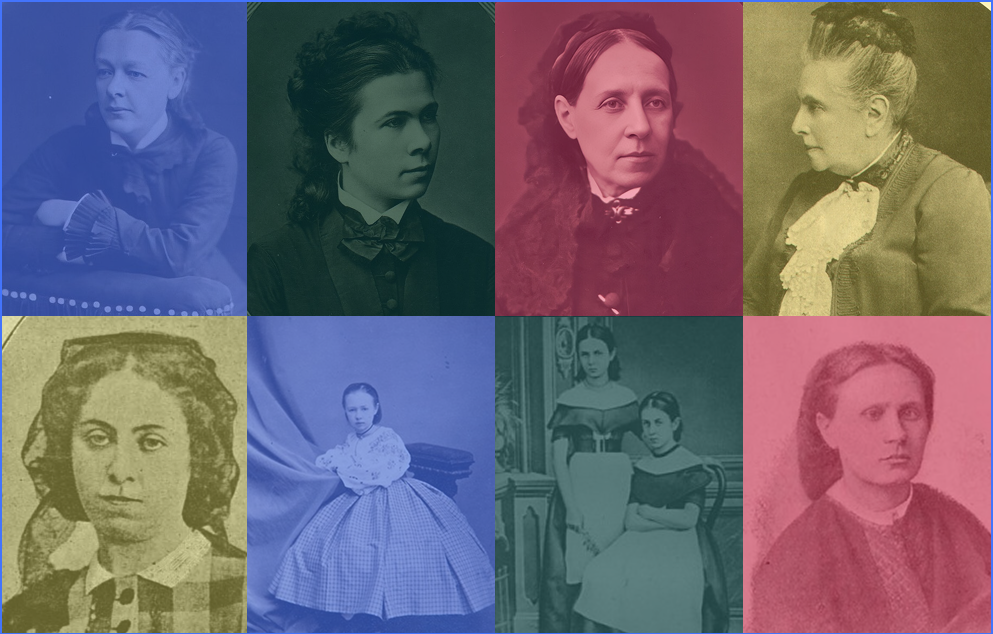
When: Thursdays, 18:00 | 8 January – 19 February 2026
Language: English
Admission: free, please, register via the link
Where: online
8 Jan.
EMERGE: from "the woman question" to women's movement (1855–1863)
15 Jan.
CARE: Inventing civic welfare through the Society of Cheap Lodgings (1859–1914)
22 Jan.
LEARN: the fight for education and credentials (1859–1868)
5 Feb.
BRAND: the Women's Publishing Cooperative and paid intellectual labour (1863–1879)
12 Feb. 18:00
LOBBY: the first mass petition campaign for women's education (1868–1872)
19 Feb.
FLEE: Zurich, blacklists, and the criminalization of educated women (1870–1874)
20 Feb:
MAKE THE REVOLUTION HAPPEN: from "going to the people" to political trials and terror (1874–1881)
Language: English
Admission: free, please, register via the link
Where: online
8 Jan.
EMERGE: from "the woman question" to women's movement (1855–1863)
15 Jan.
CARE: Inventing civic welfare through the Society of Cheap Lodgings (1859–1914)
22 Jan.
LEARN: the fight for education and credentials (1859–1868)
5 Feb.
BRAND: the Women's Publishing Cooperative and paid intellectual labour (1863–1879)
12 Feb. 18:00
LOBBY: the first mass petition campaign for women's education (1868–1872)
19 Feb.
FLEE: Zurich, blacklists, and the criminalization of educated women (1870–1874)
20 Feb:
MAKE THE REVOLUTION HAPPEN: from "going to the people" to political trials and terror (1874–1881)
About
This series tells the story of how women in the Russian Empire moved from near-invisibility in public life to visible, consequential agency in just a few decades. We follow the activists who built charities, publishing ventures, schools, petition campaigns, and finally underground networks. Along the way we trace how a women-led civic sphere confronted both patriarchy and autocracy, often under censorship and police surveillance.
The course is grounded in fresh archival research and a clear conceptual frame: Nancy Fraser’s idea of counterpublics and Ulrich Beck’s account of metamorphosis help explain how power grows in constrained spaces and then changes the rules of the game.
Why now?
A fact-based narrative of effective resistance is urgently needed in an era of right-wing backlash and democratic fatigue. The project this course draws on was conceived as exactly that: a readable, evidence-rich account that restores women to the centre of Russian modern history. It also speaks to the present. Today’s Feminist Anti-War Resistance, operating under anonymity and threat of long prison terms, mirrors the survival strategies of nineteenth-century women who wrote without bylines and organized in the shadows. Remembering earlier victories and mistakes is a civic resource, not a luxury.
Vienna is a fitting place to host this conversation. In the Habsburg capital, a Women’s Employment Association formed in 1866, part of a synchronous European surge that included St. Petersburg’s Women’s Publishing Cooperative in 1863 and London’s Society for Promoting the Employment of Women. Our meetings will make these cross-border echoes audible.
Lector: Dr. Masha Bratishcheva, historian, author and podcast show-runner.
This series tells the story of how women in the Russian Empire moved from near-invisibility in public life to visible, consequential agency in just a few decades. We follow the activists who built charities, publishing ventures, schools, petition campaigns, and finally underground networks. Along the way we trace how a women-led civic sphere confronted both patriarchy and autocracy, often under censorship and police surveillance.
The course is grounded in fresh archival research and a clear conceptual frame: Nancy Fraser’s idea of counterpublics and Ulrich Beck’s account of metamorphosis help explain how power grows in constrained spaces and then changes the rules of the game.
Why now?
A fact-based narrative of effective resistance is urgently needed in an era of right-wing backlash and democratic fatigue. The project this course draws on was conceived as exactly that: a readable, evidence-rich account that restores women to the centre of Russian modern history. It also speaks to the present. Today’s Feminist Anti-War Resistance, operating under anonymity and threat of long prison terms, mirrors the survival strategies of nineteenth-century women who wrote without bylines and organized in the shadows. Remembering earlier victories and mistakes is a civic resource, not a luxury.
Vienna is a fitting place to host this conversation. In the Habsburg capital, a Women’s Employment Association formed in 1866, part of a synchronous European surge that included St. Petersburg’s Women’s Publishing Cooperative in 1863 and London’s Society for Promoting the Employment of Women. Our meetings will make these cross-border echoes audible.
Lector: Dr. Masha Bratishcheva, historian, author and podcast show-runner.

Collaboration of FAR Vienna and Dialogbüro Vienna.
FAR is a group of Russian feminists founded in February 2022 to protest against the 2022 Russian invasion of Ukraine.