

Two years ago, in January 2026, one of the biggest – yet successfully silenced – cases in modern Russian history began. Ordinary residents of Bashqortostan are still imprisoned or have died. No one has been released. The case is barely talked about anymore. At the request of Dialogbüro Vienna, local activist and journalist Ella Sharif writes about the Baymak case.
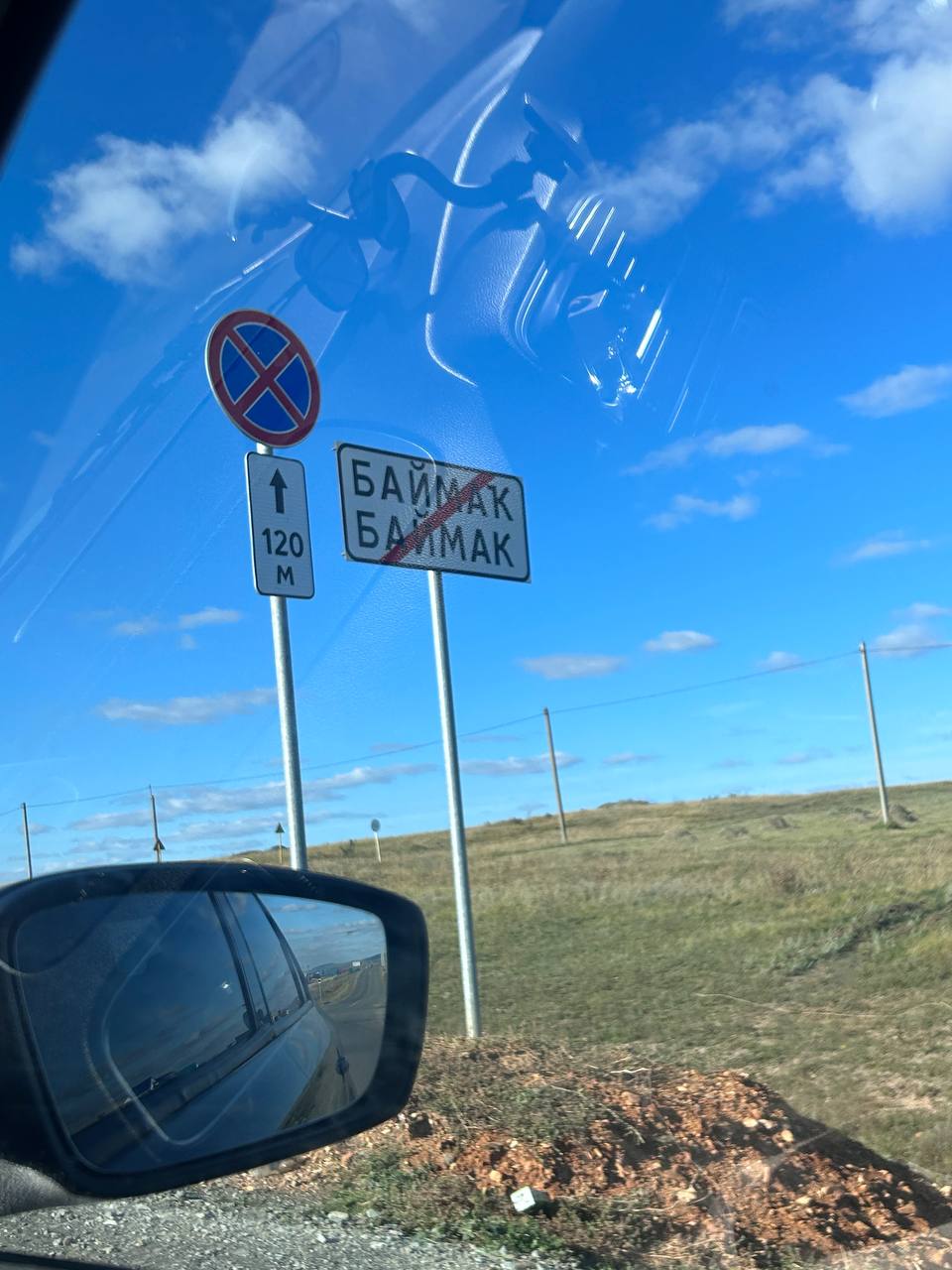
The Republic of Bashqortostan, part of the Russian Federation and located in the Southern Urals, became widely known after the events of 2024 — one of the largest protests in contemporary Russia. Tens of thousands of local residents traveled to the small Bashkir town of Baymak for the trial of environmental and national activist Fail Alsynov.
The opposition activist was sentenced to four years in a penal colony for a speech he delivered at a protest against gold mining in districts of Bashqortostan. A gathering traditionally held by Bashkirs in support of a compatriot escalated into unrest, provoked by the actions of law enforcement: they used pepper spray and began violent detentions of participants. This marked the beginning of the “Baymak case.” However, its roots run much deeper and predate these events by many years.
In August 2020, unprecedented protests had already taken place in the republic. Thousands of local residents formed a human shield in front of riot police and construction equipment in an attempt to save one of the region’s main natural landmarks — Kushtau Hill.
The shikhans — isolated hills — are a national treasure of Bashqortostan. This is the collective name for four unique elevations: Shakhtau, Toratau, Yuraktau, and Kushtau. Today, only three of them remain intact. In the mid-20th century, Shakhtau was handed over to the Bashkir Soda Company (BSC) for limestone mining. The mountain was razed to the ground, leaving only a massive quarry in its place.
In July 2018, the Kremlin-loyal head of Bashqortostan, Radiy Khabirov, refused to allow BSC to develop the shikhans Toratau and Yuraktau due to their protected status. As a compromise, he offered the company another shikhan — Kushtau.
In his 2019 annual address, Khabirov stated outright that “Kushtau will be developed.”
The shikhans — isolated hills — are a national treasure of Bashqortostan. This is the collective name for four unique elevations: Shakhtau, Toratau, Yuraktau, and Kushtau. Today, only three of them remain intact. In the mid-20th century, Shakhtau was handed over to the Bashkir Soda Company (BSC) for limestone mining. The mountain was razed to the ground, leaving only a massive quarry in its place.
In July 2018, the Kremlin-loyal head of Bashqortostan, Radiy Khabirov, refused to allow BSC to develop the shikhans Toratau and Yuraktau due to their protected status. As a compromise, he offered the company another shikhan — Kushtau.
In his 2019 annual address, Khabirov stated outright that “Kushtau will be developed.”
“Because I will never agree to leave thousands of people without work. It is useless to try to break me, twist my arm, or bribe journalists and nationalists,” he said.
After BSC received a license in 2019, local activists began holding regular protests. They formed a human chain around the mountain, holding a large flag of Bashqortostan.
On August 3, 2020, residents discovered that loggers accompanied by BSC security guards had arrived at Kushtau. Activists called the local police officer and managed to stop the deforestation. The next day, workers returned with a larger security detail. Residents again defended the forest and set up a tent camp at the foot of the hill. People from across Bashqortostan began coming to Kushtau in solidarity.
On August 3, 2020, residents discovered that loggers accompanied by BSC security guards had arrived at Kushtau. Activists called the local police officer and managed to stop the deforestation. The next day, workers returned with a larger security detail. Residents again defended the forest and set up a tent camp at the foot of the hill. People from across Bashqortostan began coming to Kushtau in solidarity.
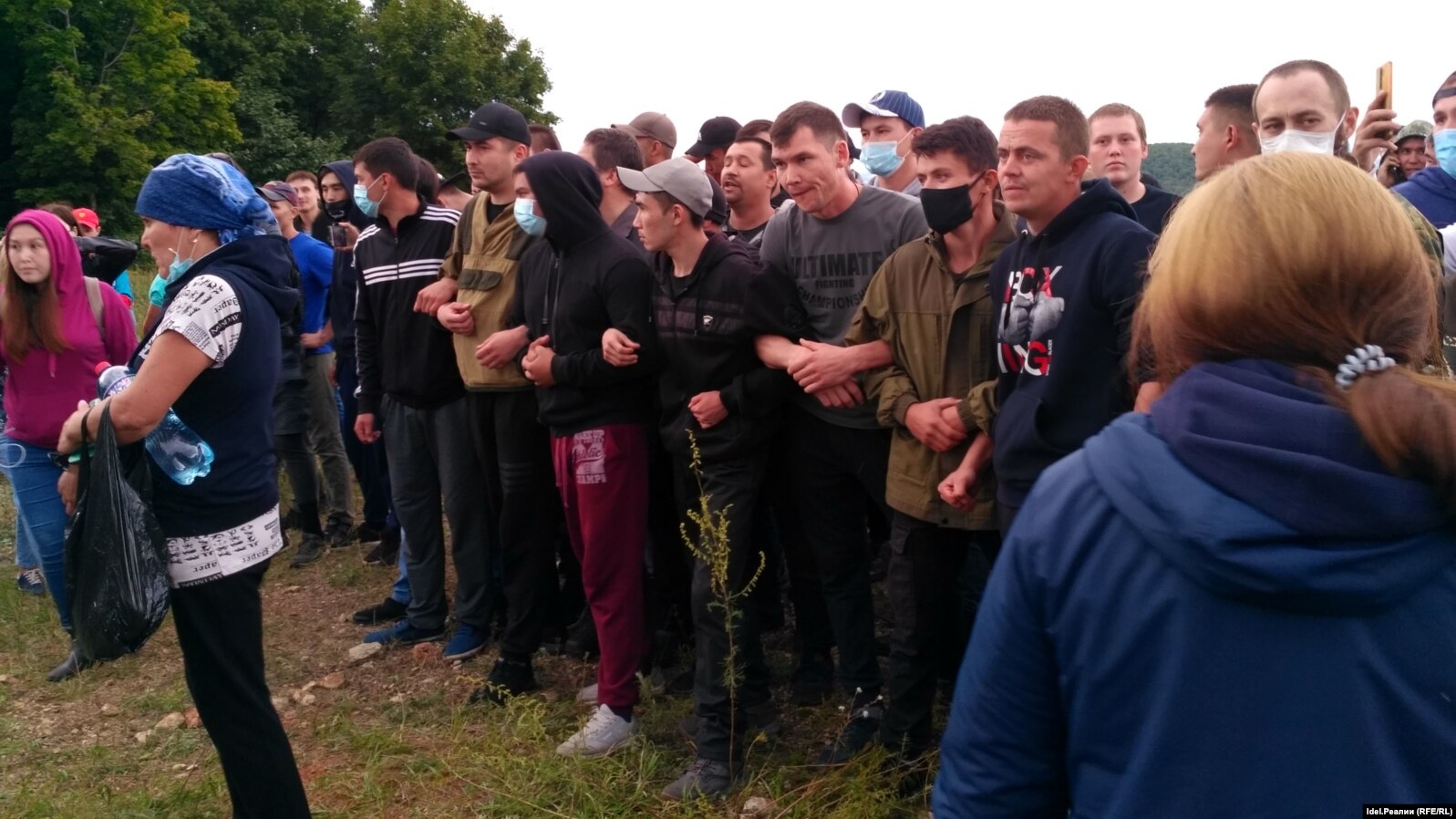
The first detentions of activists began on August 6. Three days later, on August 9, about 300 unidentified individuals attacked the tent camp under the cover of the private security company “Centurion” from Ishimbay.
Over the following week, residents continued to arrive: some stayed in the camp with the defenders of the hill, others brought food and supplies. Security guards and law enforcement tried to push the activists out, using tear gas and firing non-lethal weapons.
On August 15, about 200 BSC security guards and law enforcement officers destroyed the tent camp; around 70 people were detained. Activists reported that guards used tear gas.
Over the following week, residents continued to arrive: some stayed in the camp with the defenders of the hill, others brought food and supplies. Security guards and law enforcement tried to push the activists out, using tear gas and firing non-lethal weapons.
On August 15, about 200 BSC security guards and law enforcement officers destroyed the tent camp; around 70 people were detained. Activists reported that guards used tear gas.
“Some athletes and bikers came together with the riot police. Along with private security guards, they pulled defenders out of the crowd and handed them over to the police. We’re not letting the heavy machinery through,” activist Rim Abdulnasyrov said.
On August 16, the defenders of Kushtau managed to reclaim the camp. The confrontation ended after Radiy Khabirov arrived and promised to halt the development of the mountain.
Fail Alsynov & the start of the Baymak case
One of the most prominent defenders of Kushtau was eco-activist Fail Alsynov. In 2014, together with Ruslan Gabbasov and Ramzil Baynazarov, he founded the “Bashqort” movement. The organization advocated for the republic’s sovereignty, opposed repression of Bashkir activists, and organized rallies in defense of the Bashkir language. Members also collected signatures to protect the remaining three shikhans and, in 2018, held a large-scale “Ring of Life” action to defend Hill Toratau, when thousands of people joined hands around the mountain.
In 2020, Russia’s Supreme Court upheld a lawsuit by the Bashqortostan prosecutor’s office and designated the “Bashqort” movement an extremist organization.
Fail Alsynov initiated many traditional people’s gatherings — yıyıns — against mineral extraction in the republic. One such assembly took place in spring 2023 in the village of Ishmurzino in the Baymak district. More than a thousand residents protested the issuance of gold exploration licenses on the Irendyk Ridge. During the gathering, Alsynov delivered a speech that included the phrase "kara khalyk" (кара халык) — literally “black people,” but in this context and in Bashkir language meaning “ordinary workers, common folk”.
In 2020, Russia’s Supreme Court upheld a lawsuit by the Bashqortostan prosecutor’s office and designated the “Bashqort” movement an extremist organization.
Fail Alsynov initiated many traditional people’s gatherings — yıyıns — against mineral extraction in the republic. One such assembly took place in spring 2023 in the village of Ishmurzino in the Baymak district. More than a thousand residents protested the issuance of gold exploration licenses on the Irendyk Ridge. During the gathering, Alsynov delivered a speech that included the phrase "kara khalyk" (кара халык) — literally “black people,” but in this context and in Bashkir language meaning “ordinary workers, common folk”.
“Armenians will go back to their homeland, the kara khalyk — to their, Russians — to their Ryazan, Tatars — to their Tatarstan <…> We won’t be able to move; we have no other home. Our home is here!” Alsynov said.
Activists believe the mention of Armenians referred to Khabirov’s wife, Karine Avetisyan, who is ethnically Armenian.
In August, at Khabirov’s request, the Investigative Committee opened a criminal case against Alsynov under an article on “incitement of hatred.” In the phrase “kara khalyk”, well known to every Bashkir and used by many Turkic peoples, law enforcement claimed to see a “negative evaluation” of residents of the Caucasus and Central Asia.
Aynur Khuzhakhmetov, a specialist from the Ufa University of Science and Technology, stated in a state-commissioned linguistic examination that “the meaning of the phrase corresponds to the meanings of the words ‘khachi,’ ‘churki,’ ‘blackies'.”
In October 2023, Alsynov was detained. Searches were conducted at his home and at his parents’ home, and he was placed under travel restrictions.
In August, at Khabirov’s request, the Investigative Committee opened a criminal case against Alsynov under an article on “incitement of hatred.” In the phrase “kara khalyk”, well known to every Bashkir and used by many Turkic peoples, law enforcement claimed to see a “negative evaluation” of residents of the Caucasus and Central Asia.
Aynur Khuzhakhmetov, a specialist from the Ufa University of Science and Technology, stated in a state-commissioned linguistic examination that “the meaning of the phrase corresponds to the meanings of the words ‘khachi,’ ‘churki,’ ‘blackies'.”
In October 2023, Alsynov was detained. Searches were conducted at his home and at his parents’ home, and he was placed under travel restrictions.
Alsynov’s trial was set to take place in the small town of Baymak, with a population of about 17,000. In January, a comparable number of people gathered in front of the town’s only courthouse.
The first hearing was scheduled for January 15. That day, at least 5,000 supporters gathered outside the Baymak District Court. There were no well-known opposition politicians or public figures among them — only ordinary residents of the republic.
The case united elderly villagers and bloggers from the capital city Ufa alike; everyone chanted “Freedom!” and “We don’t abandon our own!”
That same day, Alsynov told local journalists about pressure on his supporters: “They’re being called and told they’ll be fired from their jobs.”
On January 16, Alsynov was added to Russia’s list of “extremists and terrorists.” That evening, the FSB began detaining well-known Bashkir activists and defenders of Kushtau. According to media reports, those detained included Ilnara Galina, Yulai Aralbaev, and Rafail Abdrakhmanov. Police also began visiting people who had posted messages in support of Alsynov, summoning some of them for questioning.
A few hours later, unknown individuals tried to break into an apartment in Baymak where activist Ildar Yumagulov and RusNews journalist Eduard Glukhov were staying. The apartment was saved only thanks to local residents who stood guard at the door.
On the morning of January 17, authorities tried to prevent people from attending the sentencing. All roads to the courthouse were blocked, at least three buses filled with security forces were on site, and internet access across the city was shut down.
On January 16, Alsynov was added to Russia’s list of “extremists and terrorists.” That evening, the FSB began detaining well-known Bashkir activists and defenders of Kushtau. According to media reports, those detained included Ilnara Galina, Yulai Aralbaev, and Rafail Abdrakhmanov. Police also began visiting people who had posted messages in support of Alsynov, summoning some of them for questioning.
A few hours later, unknown individuals tried to break into an apartment in Baymak where activist Ildar Yumagulov and RusNews journalist Eduard Glukhov were staying. The apartment was saved only thanks to local residents who stood guard at the door.
On the morning of January 17, authorities tried to prevent people from attending the sentencing. All roads to the courthouse were blocked, at least three buses filled with security forces were on site, and internet access across the city was shut down.
“Baymak is total chaos: cars aren’t being allowed into the city. Provocateurs are present, two buses have arrived, and there is a massive police presence, plus OMON*,” a RusNews correspondent reported.
* OMON (OMOН, Отряд мобильный особого назначения\Special Purpose Mobile Unit) is a system of military special police units within the National Guard of Russia. In modern contexts, OMON serves as a riot police group, or as a gendarmerie-like paramilitary force.
Despite this, thousands walked to the courthouse on foot, leaving their cars behind and making their way along snow-covered roads. They chanted, “Fail’, we are with you.” The internet shutdown failed to hide what was happening: personal social media accounts became the main source of information, with hundreds of posts and videos published by ordinary residents.
Police warnings about “liability for participating in an unauthorized event” did not stop people. Alsynov’s sentence — four years in a penal colony — was met with cries of outrage. By that time, more than 10,000 people were outside the court.
Immediately after the verdict was announced, unrest broke out, provoked by law enforcement. Officers began chaotically detaining peaceful people shouting “Shame!”
Police warnings about “liability for participating in an unauthorized event” did not stop people. Alsynov’s sentence — four years in a penal colony — was met with cries of outrage. By that time, more than 10,000 people were outside the court.
Immediately after the verdict was announced, unrest broke out, provoked by law enforcement. Officers began chaotically detaining peaceful people shouting “Shame!”
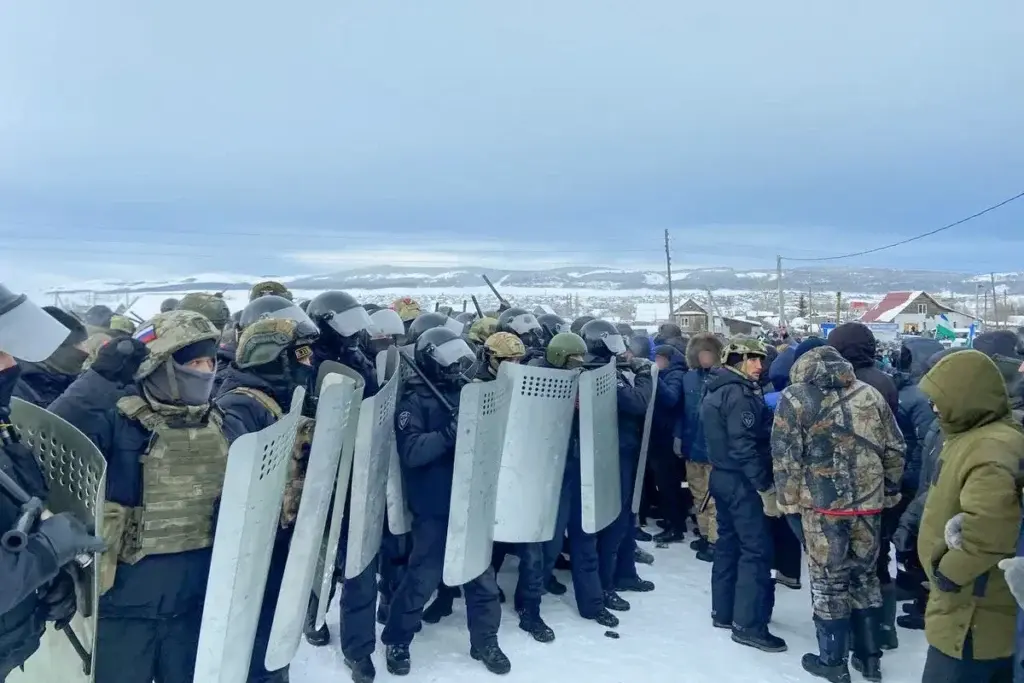
People — including elderly men, women, and children — were beaten with batons without cause. Pepper spray was used against protesters, and ambulance crews were on duty near the courthouse.
OMON (Special Purpose Mobile Unit\Riot police) cracked one protester’s skull. A cordon of fully equipped security forces stood against unarmed people; stun grenades were used. The only means of self-defense were snowballs — later, they became the formal pretext for criminal cases against nearly a hundred people.
Many activists tried to calm the crowd. In one video, future defendant in the “Baymak case” Ilyas Bayguskarov urges people to stop. Later, law enforcement would call him “one of the organizers of the protest.”
That same day, a criminal case was opened in the republic under the article on “use of violence against representatives of authority.” The Investigative Committee reported injuries among several officers, without mentioning the dozens of injured protesters. Eight people were diagnosed with serious injuries.
Many activists tried to calm the crowd. In one video, future defendant in the “Baymak case” Ilyas Bayguskarov urges people to stop. Later, law enforcement would call him “one of the organizers of the protest.”
That same day, a criminal case was opened in the republic under the article on “use of violence against representatives of authority.” The Investigative Committee reported injuries among several officers, without mentioning the dozens of injured protesters. Eight people were diagnosed with serious injuries.
On January 17, the Kirovsky District Court of Ufa arrested six activists detained near the courthouse. Denis Skvortsov, Fanzil Akhmetshin, Yulai Aralbaev, Radmir Mukhametshin, and Dmitry Petrov were sentenced to 10 days of arrest each; Ilnara Galina received 13 days.
In the following weeks, “quiet” detentions took place across the republic. On January 18, security forces arrived at the Ufa Fuel and Energy College in Baymak to check students’ phones. Two were detained and arrested for 15 days — one had a social media post.
Amid the protests, the first case of media access being restricted to its own Telegram channel was recorded. RusNews, which had been livestreaming from Baymak, reported losing access to its posts. After public outcry, the channel was restored. That same day, the “Kushtau Bayram” channel, previously run by Fail Alsynov, disappeared.
Radiy Khabirov called those who came to the court “extremists,” but the media soon began publishing the names of the detained: among them were former military personnel, a Bashkir language teacher, retired people (pensioners), and people with disabilities.
Some activists were forced to leave Bashqortostan to avoid imprisonment. Among them was Bashkir singer Altynai Valitov. On the morning of January 18, he recorded a video in support of Alsynov; by evening, unknown individuals began breaking into his apartment. The next day, windows in his home were smashed — Valitov fled Russia with his wife and child.
Activist Ildar Yumagulov also left the region after unknown individuals tried to break into his apartment on the eve of the verdict.
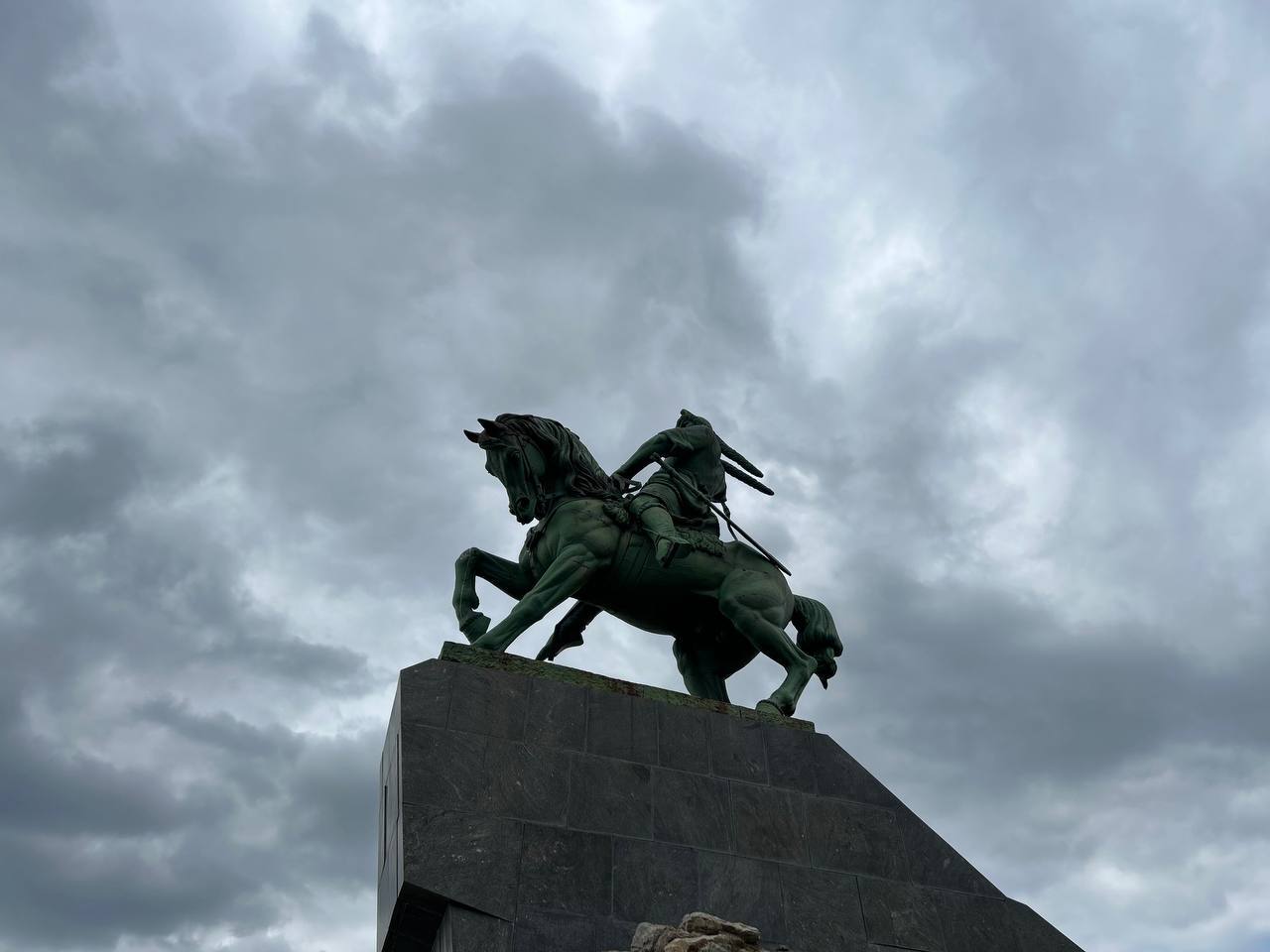
On January 19, another people's gathering took place in Ufa, near the monument to Bashkir national hero Salavat Yulaev. Although about a thousand people were simply dancing in circles, law enforcement began detentions. Among those detained was a single mother with two children — the pretext was the words “Kara khalyk” on her jacket. Another man was taken away in a police van for carrying the Bashqortostan flag.
More than 10 people were detained that day. Some activists tried to block police vehicles, shouting “Shame,” while others lay down in front of the vans.
That same day, the Baymak District Court arrested nine participants in the January 17 protests. Criminal cases were later opened against some of them.
Over the following week, residents reported movements of unmarked buses and unknown vehicles — later it emerged that they were carrying security forces. According to witnesses, anyone identified from the Baymak events was detained.
In the following weeks, “quiet” detentions took place across the republic. On January 18, security forces arrived at the Ufa Fuel and Energy College in Baymak to check students’ phones. Two were detained and arrested for 15 days — one had a social media post.
Amid the protests, the first case of media access being restricted to its own Telegram channel was recorded. RusNews, which had been livestreaming from Baymak, reported losing access to its posts. After public outcry, the channel was restored. That same day, the “Kushtau Bayram” channel, previously run by Fail Alsynov, disappeared.
Radiy Khabirov called those who came to the court “extremists,” but the media soon began publishing the names of the detained: among them were former military personnel, a Bashkir language teacher, retired people (pensioners), and people with disabilities.
Some activists were forced to leave Bashqortostan to avoid imprisonment. Among them was Bashkir singer Altynai Valitov. On the morning of January 18, he recorded a video in support of Alsynov; by evening, unknown individuals began breaking into his apartment. The next day, windows in his home were smashed — Valitov fled Russia with his wife and child.
Activist Ildar Yumagulov also left the region after unknown individuals tried to break into his apartment on the eve of the verdict.
On January 19, another people's gathering took place in Ufa, near the monument to Bashkir national hero Salavat Yulaev. Although about a thousand people were simply dancing in circles, law enforcement began detentions. Among those detained was a single mother with two children — the pretext was the words “Kara khalyk” on her jacket. Another man was taken away in a police van for carrying the Bashqortostan flag.
More than 10 people were detained that day. Some activists tried to block police vehicles, shouting “Shame,” while others lay down in front of the vans.
That same day, the Baymak District Court arrested nine participants in the January 17 protests. Criminal cases were later opened against some of them.
Over the following week, residents reported movements of unmarked buses and unknown vehicles — later it emerged that they were carrying security forces. According to witnesses, anyone identified from the Baymak events was detained.
Deaths in the Baymak Case
The first death to become known was that of Bashqortostan resident Rifat Dautov. He had not participated in the protests but was noticed by security forces allegedly in the Ufa gathering, while waiting for his girlfriend in the city center. He was later detained in a village he had traveled to. According to police, he became ill in the police van and died before an ambulance arrived. Dautov’s sister says she saw bruises and marks resembling electric shock injuries at the morgue. No criminal case was opened. During the funeral in a neighboring village, security forces were deployed, allegedly “to prevent protests.”
The second victim of the January events was pensioner Minniyar Bayguskarov. He was found hanged after an interrogation. Later, his brother admitted that the man had been beaten before his suicide.
The second victim of the January events was pensioner Minniyar Bayguskarov. He was found hanged after an interrogation. Later, his brother admitted that the man had been beaten before his suicide.
“They beat him, beat him, drove him to Ufa. They beat him, forced confessions out of him. Were you there? Yes. Did you participate? Yes. Sixty-five years old — and that’s how they beat him,” his brother Salavat Bayguskarov said.
One of those present at Alsynov’s trial, Dim Davletkildin, voluntarily went to a police station after a search was conducted at his home. On January 22, he was sent to a pretrial detention center, where he was brutally beaten for refusing to unlock his phone. He was diagnosed with a fracture of a transverse process of the spine and anemia; he received no medical care, and relatives were not even allowed to pass him a special vest for his spine.
A similar story happened to 57-year-old worker Zaki Ilyasov. One of the last detainees, he also went to the police station voluntarily after returning from a shift job. About an hour after his detention, he was hospitalized — he spent nearly a day in a coma. Relatives and activists reported that he was brought to the hospital “in critical condition with multiple injuries.”
The daughter of Aisuvak Yavgastin — a father of six — also reported that her father was beaten after the Baymak assembly.
A similar story happened to 57-year-old worker Zaki Ilyasov. One of the last detainees, he also went to the police station voluntarily after returning from a shift job. About an hour after his detention, he was hospitalized — he spent nearly a day in a coma. Relatives and activists reported that he was brought to the hospital “in critical condition with multiple injuries.”
The daughter of Aisuvak Yavgastin — a father of six — also reported that her father was beaten after the Baymak assembly.
None of these cases received further investigation.
Radiy Khabirov called “disgusting” the proposal to honor Rifat Dautov’s memory at a meeting with representatives of the World Quriltai of Bashkirs — a forum, congress dedicated to preserving traditions and language.
The last defendant in the “Baymak case” deserves mention: RusNews journalist Olga Komleva. She was not in Baymak but helped Dautov’s sister and covered trials of detainees in Ufa. In March 2024, she was arrested in a case related to participation in the FBK, designated “extremist” in Russia. In July 2025, Komleva — who has diabetes and is raising a minor son — was sentenced to 12 years in a penal colony.
The last defendant in the “Baymak case” deserves mention: RusNews journalist Olga Komleva. She was not in Baymak but helped Dautov’s sister and covered trials of detainees in Ufa. In March 2024, she was arrested in a case related to participation in the FBK, designated “extremist” in Russia. In July 2025, Komleva — who has diabetes and is raising a minor son — was sentenced to 12 years in a penal colony.
In autumn 2024, Radiy Khabirov once again became head of Bashqortostan. His candidacy was supported by the so-called president of Russia, Vladimir Putin, who ignored dozens of criminal cases against local residents, deaths, and the public’s real attitude toward its leader.
Meanwhile, sentences in the “Baymak case” continue to be handed down: 68 people have already received real prison terms — from three years and three months to seven and a half years in a penal colony. “Dozhd'” (Дождь) journalist Valeria Kichigina, who filmed a report on the “Baymak case,” later linked her own criminal prosecution to it.
This is the first time in modern Russian history that an article previously used against well-known opposition figures has put ordinary local residents — workers and retired — on the defendants’ bench.
Eighty-two political prisoners who, until then, did not know what a “political prisoner” was.
Meanwhile, sentences in the “Baymak case” continue to be handed down: 68 people have already received real prison terms — from three years and three months to seven and a half years in a penal colony. “Dozhd'” (Дождь) journalist Valeria Kichigina, who filmed a report on the “Baymak case,” later linked her own criminal prosecution to it.
This is the first time in modern Russian history that an article previously used against well-known opposition figures has put ordinary local residents — workers and retired — on the defendants’ bench.
Eighty-two political prisoners who, until then, did not know what a “political prisoner” was.
Ella Sharif